

Zinc Plating
Metal finishing refers to any process that alters or coats the surface of a metal part. The goal varies by application: some finishes prevent corrosion, others reduce friction, improve conductivity, or help paint adhere more reliably. Common metal finishing processes include:
Plating
(zinc, zinc nickel, electroless nickel)
Anodizing
(Sulfuric, Hardcoat)
Conversion coatings
(chem film, TCP)
Mechanical finishes
(blasting, deburring)
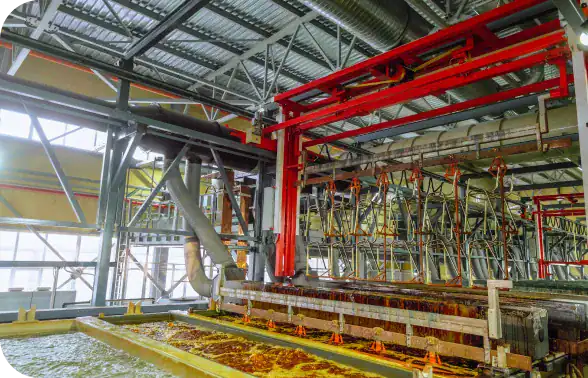
Zinc plating is one of the most widely used of these treatments, particularly for steel and iron components across automotive, hydraulic, and heavy equipment applications. This page explores zinc plating, how it compares to other metal finishing processes, and what to consider when selecting the right one for a given part.

The Role of Zinc Plating in Industrial Manufacturing
Steel is the workhorse of industrial manufacturing, but on its own it’s vulnerable. Bare steel begins to rust within hours of exposure to moisture, and once corrosion starts, it compounds, and pitting weakens structural integrity, fasteners seize, and load-bearing parts fail well before their intended service life. Methods like zinc plating can be used to protect the exposed steel and act as a sacrificial layer from air and moisture.
Beyond corrosion resistance, metal finishing is frequently a specification requirement. Fasteners, brackets, and automotive components often call out ASTM B633 or designate specific plating classes tied to salt-spray hour ratings. Zinc plating with supplemental top coats also gives manufacturers control over friction coefficients on threaded fasteners and consistent torque-tension performance. Zinc also provides a uniform, paintable surface for downstream finishing.
Types of Zinc Plating
Zinc plating deposits a thin zinc layer onto steel or iron through electroplating. The zinc acts as a sacrificial coating that degrades before the base metal does, extending the usable life of the part. It can provide effective, long-lasting results to extend component lifespan at a relatively low cost.
Available zinc metal finish options include:

Clear zinc plating
(also called blue zinc)
Provides solid corrosion protection at a cost-effective price point. It is a standard option for hardware, fasteners, and general industrial components and is compatible with most secondary finishes.

Yellow zinc
Delivers enhanced corrosion resistance with a gold or iridescent tint. It is commonly used for automotive and industrial parts where color-coding assists with part identification. Yellow trivalent zinc is not recommended for parts requiring subsequent paint, powder coat, or printing.

Black zinc
Provides a uniform dark surface finish for parts while protecting against corrosion and wear. It is commonly used for defense, military, and automotive applications.
Zinc nickel is sometimes specified for applications requiring higher corrosion resistance. It can be used as a cadmium alternative and is seen in automotive, marine, aerospace, and agricultural applications with demanding performance specs. Both are low cost, although zinc is often cheaper for basic hardware.
Materials and Operating Environments that Benefit from Zinc Plating
Zinc plating protects base metals by acting as a sacrificial barrier that corrodes before the underlying material. Several variables impact when zinc plating is the right finish for the application, including base material, operating environment, and processing requirements:

Base material
Zinc plating is commonly applied to steel and iron base materials. Copper alloys can also use zinc plating to prevent rust and provide a cost-effective alternative to solid stainless steel.
Operating environment
The given operating environment affects the level of protection required. Components used indoors in mild conditions have different requirements than parts exposed to road salt, humidity, repeated washdown, or chemical contact. Clear zinc plating is sufficient for many interior environments or mildly corrosive conditions.
Applicable specification or industry standard
ASTM specifications are among the standards used for zinc and zinc-nickel plating. Specifically, zinc plating processes must meet ASTM B633 standards, with salt spray testing used to verify corrosion resistance performance of plated parts.
Another factor to consider is secondary processing. Some finishes are compatible with paint, powder coat, or other secondary processes, while others aren’t. Zinc plating provides a good base for secondary processes like painting and powder coating, provided the surface is properly pretreated with a conversion coating and thoroughly cleaned to remove oils and prevent outgassing or peeling.
Industries and Applications That Rely on Zinc Plating
Zinc plating is a cost-effective choice used across a range of industries that produce metal components:

Automotive
Zinc electroplating can be used to protect brake calipers and steering components, as well as screws and brackets. Yellow zinc plating provides robust rust protection for under-hood or exterior hardware.

Hydraulics
Components like adapters, fittings, and valves exposed to moisture and other environmental conditions require coatings with strong adhesion and uniform thickness.

Telecommunications
Zinc plating provides a sacrificial anti-corrosion layer and maintains electrical conductivity for grounding components. It is widely used for cell towers, connectors, fasteners, and bus bars.

Food and beverage
Finishes need to be chemically stable, non-reactive, and rated for sanitation environments. Zinc can appear on freezer shelving or HVAC components where food does not actively touch the metal. Blue/clear zinc can be used on external fasteners, nuts, and bolts in dry processing room environments.

Defense
Zinc plating can be used on general interior components and low-exposure hardware and framing elements. Finishes can combine zinc base coats with passivates and sealers to meet defense and ASTM standards.

Data Centers
Zinc plating is widely used in Data centers on connectors, fasteners, couplings and cable trays.
Partnering With Saporito Finishing for
Expert Zinc Plating Services
Saporito Finishing has provided finishing services for over 80 years. The facility has grown to more than 130,000 square feet and covers a full range of processes: zinc plating, zinc nickel, electroless nickel, anodizing, chem film, and hard coat anodizing. All zinc plating finishes at Saporito are trivalent, RoHS compliant, and ELV compliant.
Saporito holds ISO 9001:2015 and Nadcap certifications and has been recognized as a Product Finishing Top Shop. The company was also an early leader in environmental compliance, becoming the first metal finisher to request a discharge authorization permit from the Metropolitan Sanitary District of Greater Chicago.
For purchasing managers and engineers evaluating zinc plating or any other surface treatment, Saporito’s team can review part requirements and recommend an appropriate process. Talk to a finishing expert to discuss a project, or request a quote to get started.